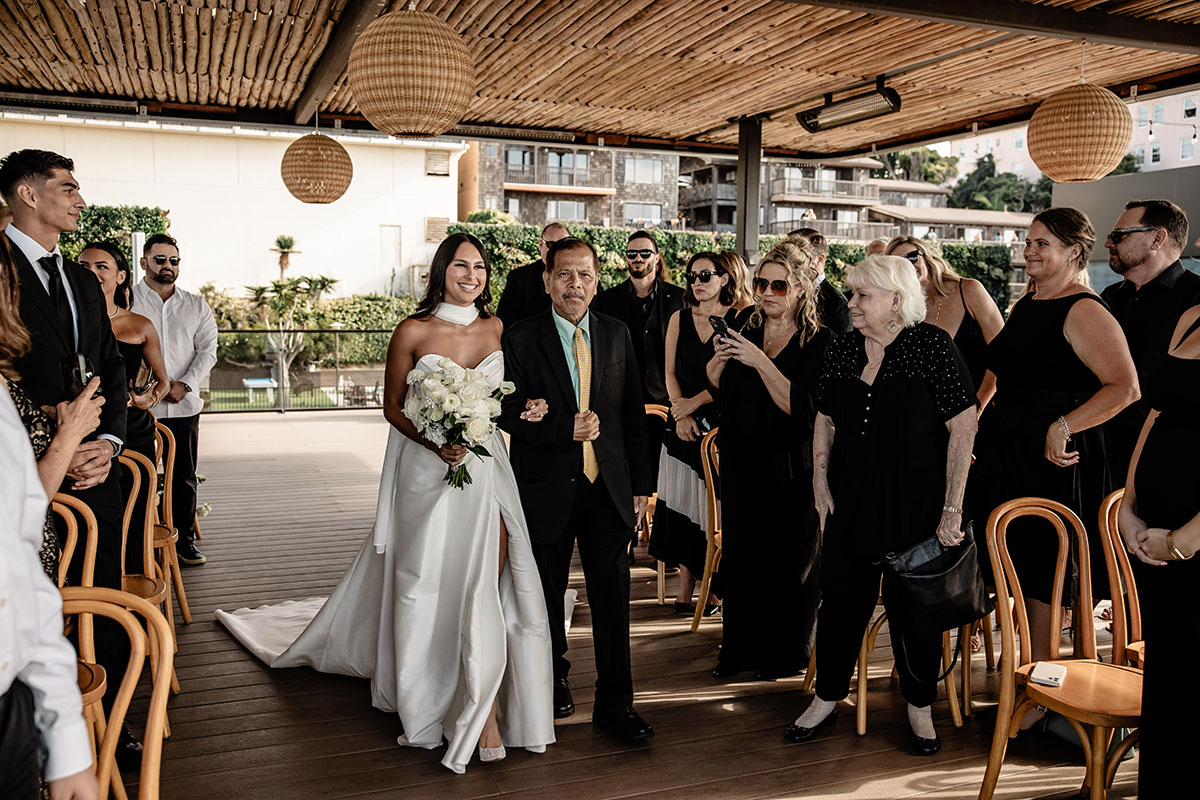
Regarding wedding invitations, few dress codes generate as much confusion as “black tie optional.” Attendees frequently hesitate at this term, uncertain if it’s a request for tuxedos and evening dresses or a more lenient take on formal attire. In contrast to straightforward instructions like “casual” or “black tie,” the “optional” part offers flexibility—sometimes excessively so.
Therefore, what does the term “black tie optional” actually imply, and how should attendees understand it when choosing their attire? Grasping this dress code can ensure that guests achieve the proper blend of sophistication and suitability, avoiding dressing either too formally or too casually.
At its core, “black tie optional” suggests a level of formality close to black tie but with a degree of flexibility. For men, this means wearing a tuxedo is welcome but not required; a dark, well-tailored suit with a conservative tie is also perfectly acceptable. For women, this dress code invites floor-length gowns, but chic cocktail dresses, sophisticated jumpsuits, or a formal midi dress can also meet the standard.
From the couple’s perspective, choosing a “black tie optional” dress code is often a way to accommodate a wider range of guest preferences and budgets. They might envision a refined celebration—perhaps an evening affair at a grand venue—but also recognize that not everyone owns a tuxedo or an evening gown. The optional aspect offers an elegant tone without pressuring every guest to dress in full formal attire.
The time and setting of the event can also provide clues. If the wedding is scheduled for the evening at a high-end location like a historic hotel, art museum, or private club, the vibe leans more formal, nudging guests toward the tuxedo and gown end of the spectrum. Conversely, a daytime ceremony or reception in a garden or beach setting may indicate more flexibility within the “optional” category.
For men who want to err on the side of formality without renting a tux, a dark navy or charcoal suit paired with a crisp white shirt and a classic tie will typically meet expectations. Polished dress shoes and minimal accessories complete the look. If the groom and groomsmen are in tuxedos, wearing one as a guest can help match the tone, but it’s not mandatory.
Women tackling a “black tie optional” dress code have many chic choices. An elegant evening gown is consistently a reliable option, especially for gatherings beginning after 6 p.m. Nevertheless, an upscale cocktail dress—crafted from luxurious materials like silk, satin, or chiffon—can also be fitting. Accessories such as standout earrings, a stylish clutch, and classy heels can enhance even a simple outfit to match the event.
Color choice also plays a role. Deeper tones like navy, emerald, burgundy, or black tend to convey a more formal mood, while lighter pastels or floral patterns can work if the setting and time suggest a more relaxed interpretation. Regardless of the hue, aim for refined silhouettes and well-constructed garments.
It’s important not to confuse “black tie optional” with semi-formal or cocktail attire. While those codes are more lenient and casual, “black tie optional” still implies a level of elegance. Showing up in something too informal—like a sundress, khakis, or sport coat—might feel out of place, especially if other guests have leaned into the more formal end of the spectrum.
One advantage of this dress code is the room it offers for personal style. Unlike strict black tie, which limits men to tuxedos and women to floor-length gowns, “optional” allows for a more individual approach. Guests can honor the formality of the occasion while choosing outfits that align with their personal taste and comfort.
This flexibility can be especially helpful for out-of-town guests or those traveling with limited luggage space. Packing a versatile suit or a dress that can be styled up or down with accessories provides options without overcommitting to a single look. For couples, offering this option can ensure that guests feel welcome regardless of wardrobe access or fashion preferences.
Of course, if a guest is ever unsure, it’s perfectly acceptable to reach out to the couple or wedding planner for clarification. They can offer insight into the formality of the venue, the attire of the wedding party, and any regional customs that might influence expectations. This is especially true for destination weddings or multicultural celebrations, where dress codes may vary based on tradition.
Ultimately, the goal of a wedding dress code is to set a tone that aligns with the couple’s vision while helping guests feel confident and comfortable. “Black tie optional” strikes a middle ground—elevated but inclusive, stylish but not rigid. It allows everyone to participate in the elegance of the occasion without feeling burdened by specific rules.
If carefully considered, this dress code can result in a tastefully dressed group of attendees who look harmonious without being identical. By focusing on details, high-quality materials, and a touch of elegance, guests can confidently adopt the “black tie optional” style, ensuring they blend well with the occasion while showcasing their personal fashion sense.