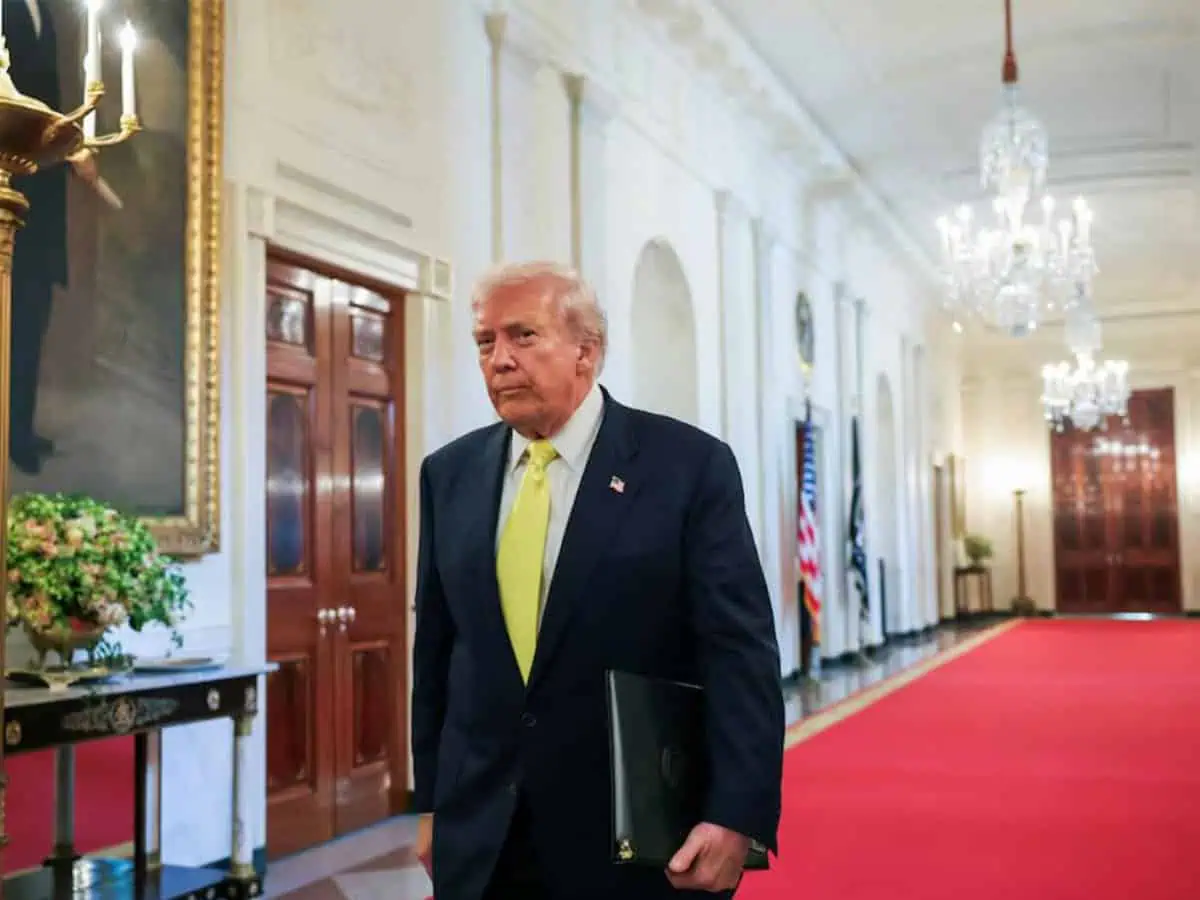
The United States and China have once again extended a trade truce, delaying a potential escalation of tariffs that would have significantly disrupted the global economy. In an executive order signed just hours before the previous agreement was set to expire, President Donald Trump postponed the imposition of higher tariffs on Chinese imports for an additional 90 days. This decision, which Beijing reciprocated with a parallel extension, provides both nations with more time to address their ongoing trade disputes and work toward a more comprehensive agreement. The move was widely seen as a necessary step to prevent a full-blown trade war and has been met with relief by financial markets and American businesses.
The decision to delay the tariff hike is the result of months of intricate negotiations and a recognition of the significant economic fallout that would have occurred without a truce. The previous agreement, reached in May, had temporarily lowered tariffs from prohibitive triple-digit levels that had threatened to cripple trade between the two countries. The recent extension maintains the current, albeit still high, tariff rates, with the US keeping a 30% tariff on Chinese goods and China maintaining a 10% levy on American products. This temporary stability is crucial for businesses that rely on global supply chains, particularly as they prepare for the upcoming holiday shopping season.
The White House’s executive order stated that the United States continues to have discussions with China “to address the lack of trade reciprocity” and other concerns, and that Beijing has “taken significant steps” to address them. These issues include intellectual property rights, non-reciprocal trade arrangements, and government subsidies that American officials argue give Chinese companies an unfair competitive advantage. The extension is seen as a way to allow these complex negotiations to continue without the pressure of an immediate trade war. It also keeps open the possibility of a future meeting between President Trump and Chinese President Xi Jinping, which many believe is essential for a lasting resolution.
The trade relationship between the US and China is not just about tariffs; it is a complex web of economic, political, and strategic interests. The use of tariffs as a bargaining tool has been a central part of President Trump’s trade policy, aimed at reducing the trade deficit and bringing manufacturing jobs back to the US. However, this strategy has also created significant challenges, with some analysts arguing that it has not yielded the desired concessions from China and has given Beijing a “cudgel of its own” in the form of control over rare earth minerals and other critical exports. The extension of the tariff deadline highlights the difficulty of using tariffs as leverage and the need for a more nuanced approach to trade negotiations.
The impact of this trade truce extends far beyond the borders of the US and China. The two nations are the world’s largest economies, and their trade relationship has a profound effect on global markets and supply chains. The uncertainty created by the threat of escalating tariffs has caused volatility in financial markets and has made it difficult for businesses around the world to plan for the future. The extension of the deadline provides a much-needed period of calm, allowing for greater stability and predictability in global commerce. However, the underlying issues remain unresolved, and the possibility of a future trade war still looms.
For American businesses, the extension is a welcome development. Trade groups like the US-China Business Council have been vocal in their support for a pause in the tariff war, arguing that it is “critical” for providing the stability needed for medium and long-term planning. They also hope that the negotiations will lead to an agreement that improves their access to Chinese markets and removes some of the retaliatory measures that have hurt American exports. The trade war has had a tangible impact on various sectors of the US economy, from agriculture to manufacturing, and a lasting resolution would be a significant boost for many American companies.
The latest advancement highlights the complex and high-risk aspects of the trade ties between the US and China. Although the immediate danger of significant tariff increases has been avoided, the fundamental conflicts between these countries remain unresolved. The upcoming 90 days will be a pivotal time for negotiators to strive for an agreement that can fulfill both parties’ interests and lay the groundwork for a more stable and balanced trade relationship. The international community will be attentively observing as these two economic powerhouses endeavor to find a solution that prevents a costly and harmful trade conflict. The future of global commerce is at stake, and the results of these negotiations will have a long-lasting effect on economies worldwide.