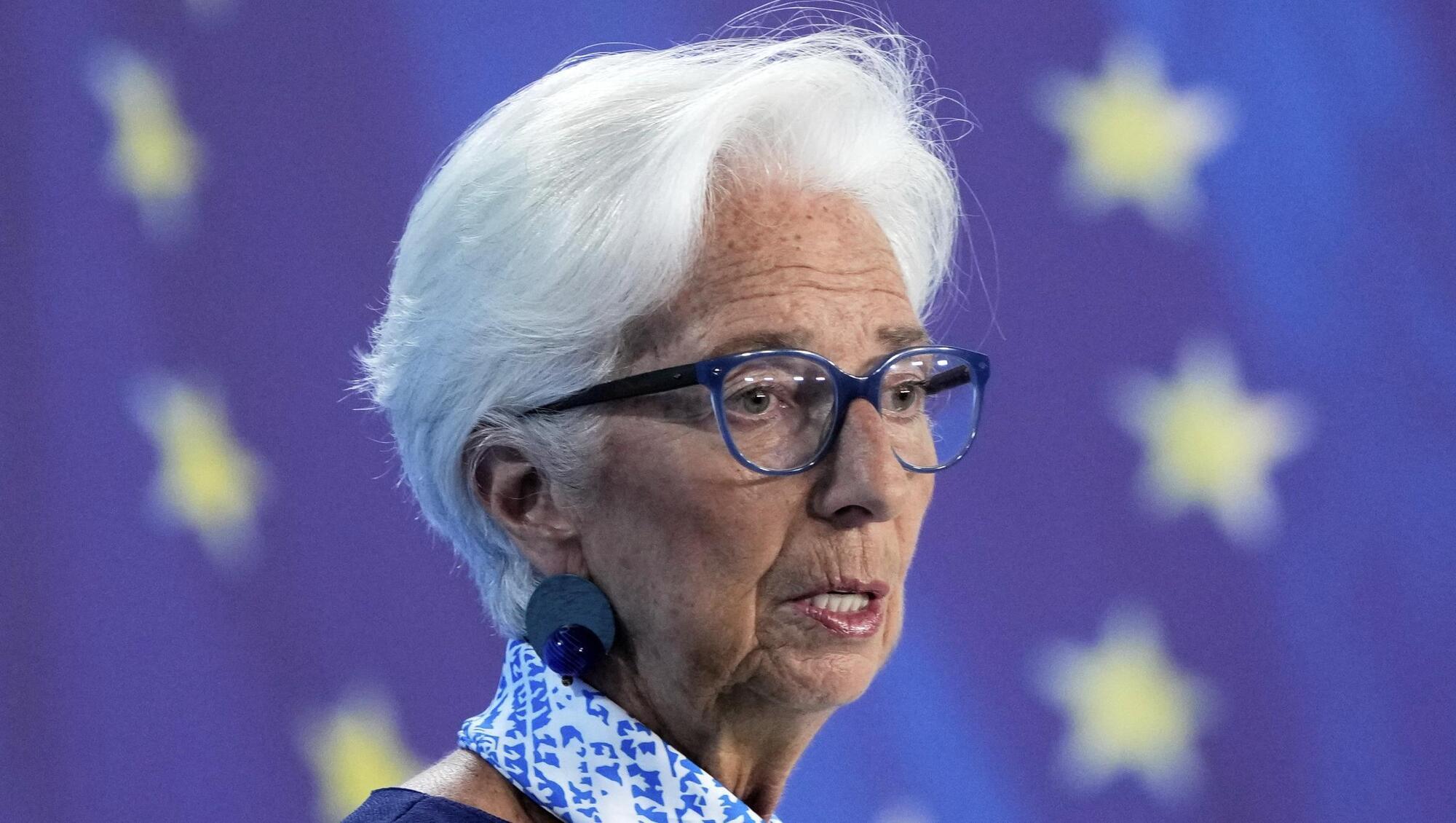
The independence of central banks has long been considered a cornerstone of economic stability, providing a safeguard against political interference in monetary policy. Recently, European Central Bank President Christine Lagarde underscored this principle with a clear warning: any erosion of the Federal Reserve’s autonomy would create significant risks for financial markets, economic growth, and public trust in institutions. Her statement reflects a growing concern among economists that central bank independence, once taken for granted, is facing unprecedented pressures in a rapidly changing global landscape.
Lagarde’s remarks come at a time when central banks worldwide are navigating a delicate balancing act. After years of low interest rates, quantitative easing, and extraordinary measures to stabilize economies during the pandemic, monetary authorities now face the challenge of taming inflation without triggering a deep recession. The Federal Reserve, in particular, has been at the center of this effort, raising rates to control price growth while monitoring the potential impact on employment and financial stability.
In this context, political voices have become increasingly vocal about monetary policy decisions. Some argue that interest rates remain too high, placing unnecessary strain on households and businesses. Others insist that a premature loosening of policy could reignite inflationary pressures. Lagarde’s warning addresses the danger of allowing such debates to dictate central bank actions, emphasizing that monetary policy must be based on data and long-term objectives rather than short-term political gains.
History offers numerous examples of the consequences when monetary policy becomes politicized. When governments exert pressure on central banks to keep rates artificially low, the result often includes runaway inflation, currency devaluation, and the erosion of investor confidence. Conversely, overly restrictive measures driven by political agendas can stifle growth and deepen economic downturns. Lagarde’s comments remind policymakers that the credibility of institutions like the Federal Reserve depends on their ability to operate free from partisan influence.
The Federal Reserve’s independence is not merely a legal formality but a key factor in maintaining global financial stability. Investors and markets rely on predictable, evidence-based decisions from central banks. Any perception that those decisions are influenced by political cycles could undermine confidence in the U.S. economy, destabilize currency markets, and create ripple effects across international trade and investment flows. Lagarde’s remarks, therefore, highlight an issue that extends beyond American borders, touching on the interconnected nature of the global economy.
Although the independence of central banks is considered crucial, it still faces examination and criticism. Political leaders frequently express dissatisfaction when policy choices clash with their fiscal goals or campaign assurances. In the past few years, the emergence of populist movements has strengthened demands for increased political influence over economic controls, such as monetary policy. These demands grow stronger in times of economic difficulty, when the public desires swift solutions to increasing expenses or unemployment, and politicians search for methods to provide rapid outcomes.
Lagarde’s view is consistent with an enduring agreement among economists: political meddling in the short term usually leads to long-term instability. The impacts of monetary policy unfold over time, indicating that today’s decisions affect inflation, jobs, and growth months or even years down the line. On the other hand, decisions driven by political agendas frequently focus on short-term gains at the expense of future outcomes, fostering a pattern of volatility that hampers durable economic development.
Otro aspecto esencial de este debate se relaciona con la percepción del público. La confianza en las instituciones financieras ya es frágil en varias regiones del mundo, disminuida por crisis y escándalos durante los últimos veinte años. Si el público empieza a visualizar a los bancos centrales como extensiones del poder político en lugar de defensores independientes de la salud económica, la confianza en el sistema financiero global podría debilitarse. Un cambio de este tipo complicaría los esfuerzos para gestionar crisis, ya que la credibilidad es una herramienta crucial para tranquilizar a los mercados durante momentos de incertidumbre.
The question of independence also intersects with transparency and accountability. Critics argue that granting too much autonomy to central banks risks insulating them from democratic oversight. Proponents counter that independence does not mean lack of accountability; rather, it ensures that decisions are made based on expertise and data rather than political expediency. Lagarde’s comments suggest that preserving independence must go hand in hand with clear communication, robust governance, and mechanisms for public scrutiny that reinforce legitimacy without compromising operational autonomy.
The Federal Reserve’s recent policy trajectory illustrates the importance of this principle. Faced with inflation rates unseen in decades, the Fed implemented aggressive rate hikes to stabilize prices. These moves were unpopular in some political circles because they raised borrowing costs for consumers and businesses. However, central bankers argued that failing to act decisively would allow inflation to spiral further, ultimately causing greater harm to the economy. This scenario underscores why independence is crucial: difficult decisions often require prioritizing long-term stability over short-term popularity.
Lagarde’s cautionary message echoes beyond Washington. Across the globe, central banks encounter similar issues as governments increase public expenditure, and international tensions disturb commercial and energy sectors. In this context, the drive for political figures to sway monetary choices becomes more compelling. Whether in developing regions or established economies, upholding the autonomy of institutions is crucial to avoiding policy errors that might intensify worldwide instability.
Ultimately, the debate over central bank autonomy reflects a broader tension between technocratic governance and democratic accountability. While elected officials bear responsibility for economic outcomes, central banks function as specialized institutions designed to shield monetary policy from the ebbs and flows of partisan politics. Lagarde’s message serves as a reminder that weakening this safeguard could undermine not only economic performance but also the resilience of democratic systems themselves.
In today’s world, where we face challenges like rising prices, advancements in digital money, and increased global tensions, the importance of central banks operating independently is even greater. They must guide nations through unpredictable times while ensuring confidence in the steadiness of currencies and financial institutions. Undermining their autonomy could lead to immediate risks and potentially bring about future economic turmoil, a scenario that both leaders and the public must strive to avoid.
Lagarde’s remarks should not be interpreted as mere caution but as a call to reaffirm one of the pillars of modern economic governance. In times of rapid change and political polarization, the temptation to erode institutional safeguards is real. Preserving the autonomy of central banks like the Federal Reserve is not simply a matter of principle—it is a prerequisite for sustainable growth, price stability, and confidence in the global economy.