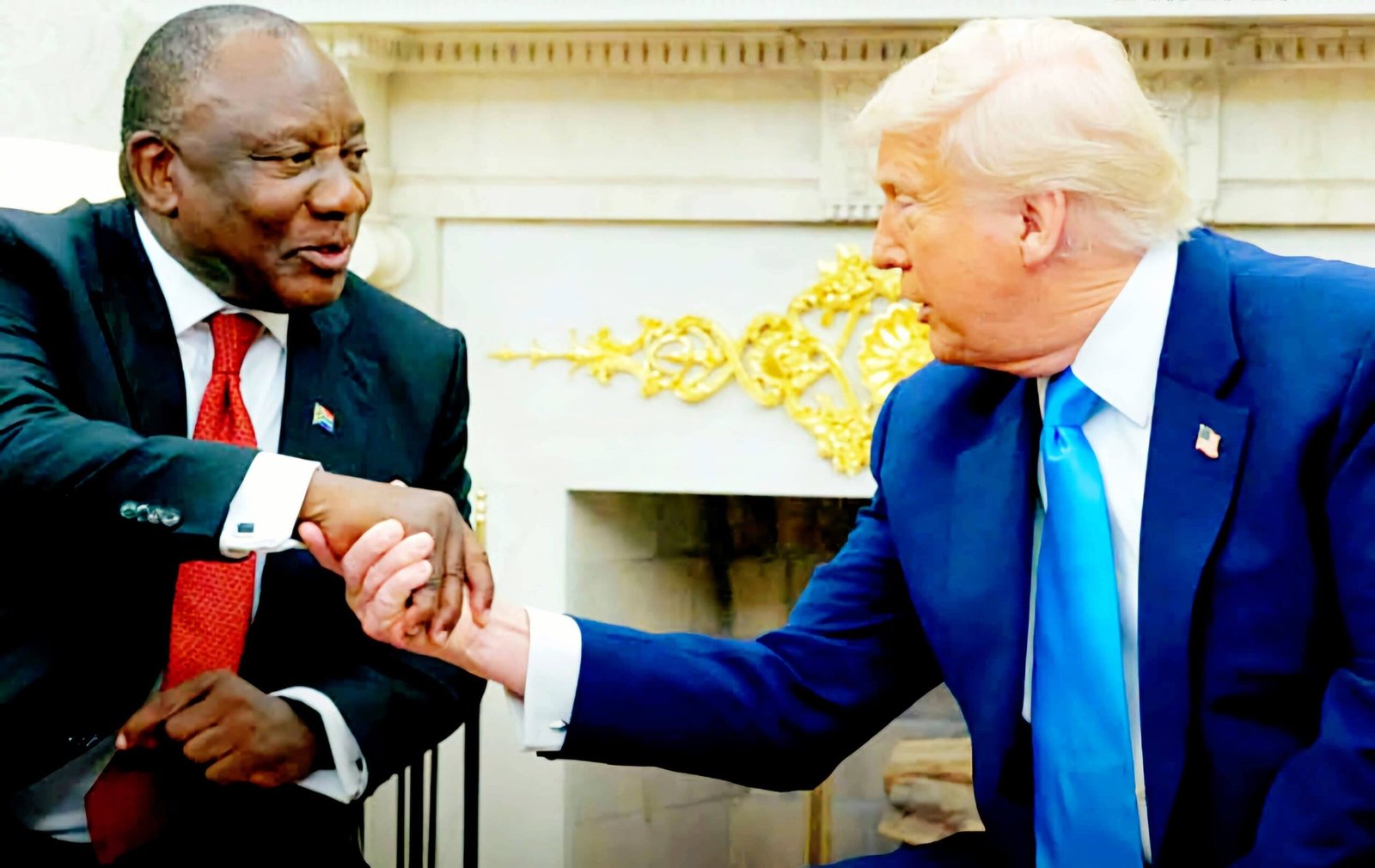
Cyril Ramaphosa, the President of South Africa, has openly voiced his disapproval of the suggested 30% duty on South African products, which was recently introduced by the former U.S. leader Donald Trump. This tariff suggestion, part of a broader economic plan associated with shifts in trade, has sparked worries not just in South Africa but also among worldwide trade analysts who dread its possible effects on international relations and developing market economies.
The suggested tariff, focused particularly on exports from South Africa to the United States, aligns with Trump’s persistent narrative highlighting national priorities and safeguarding American businesses. The former president has justified the decision as a crucial step to address what he calls “unfair trade practices,” while opponents, such as President Ramaphosa, have pointed out the significant effects these measures might have on developing nations, especially those dependent on United States trade.
In a recent statement, Ramaphosa emphasized the importance of maintaining open trade channels between South Africa and the U.S., noting that punitive tariffs not only threaten economic growth in his country but could also strain diplomatic ties that have historically been cooperative and mutually beneficial. “South Africa has always sought to engage with its trading partners in good faith,” Ramaphosa remarked. “Imposing steep tariffs on our products undermines the principles of fair trade and collaboration that both our nations have long upheld.”
The suggested tariffs are aimed at various South African products, such as metals, farm goods, and manufactured products, which are vital to the nation’s export-driven economy. The United States is an important trade partner for South Africa, and the possibility of a 30% tariff brings the threat of job cuts, decreased investment, and economic uncertainty, especially as the country works to bounce back from the financial impacts of recent global issues.
Economists have weighed in on the potential repercussions, noting that such tariffs could not only disrupt South Africa’s export sectors but may also set a worrying precedent for how larger economies engage with emerging markets. Some analysts argue that the move reflects a shift toward protectionism that could have broader implications for global trade norms, while others suggest that countries like South Africa may need to diversify their export destinations to mitigate the risks posed by such unilateral actions.
In his speech, Ramaphosa advocated for engaging in constructive conversations as the ideal method for settling trade disagreements. He highlighted South Africa’s dedication to a rules-based global trading framework, supported by organizations such as the World Trade Organization (WTO). He further stressed the importance of fair trade actions that acknowledge the disparities between developed and emerging economies.
El impacto potencial de las tarifas propuestas va más allá de la economía. Analistas advierten que las tensiones comerciales podrían poner en riesgo la relación diplomática entre las dos naciones, la cual históricamente se ha caracterizado por la colaboración en áreas como la seguridad, la educación, y la ayuda al desarrollo. Durante mucho tiempo, Sudáfrica ha sido vista como un aliado estratégico de los Estados Unidos en África, y cualquier empeoramiento en las relaciones bilaterales podría tener consecuencias en todo el continente.
The suggested tariff is under consideration within the framework of South Africa’s membership in the BRICS group, an association involving Brazil, Russia, India, China, and South Africa that seeks to enhance economic collaboration among developing nations. Trump has earlier expressed doubt about nations affiliated with the BRICS coalition, indicating that the group poses a challenge to Western economic supremacy.
Ramaphosa, however, has emphasized that South Africa’s global partnerships do not exclude one another and that his administration is devoted to maintaining good interactions with both Western countries and its BRICS associates. “We have faith in the strength of multilateralism,” he expressed. “South Africa’s growth is most effectively supported by connecting with all parts of the globe, while avoiding the adoption of polarizing economic strategies.”
Trade unions and business leaders in South Africa have joined the chorus of concern over the proposed tariffs. Representatives from key industries—including mining, agriculture, and manufacturing—have warned that the imposition of steep tariffs could lead to significant job losses, at a time when South Africa is grappling with high unemployment rates and economic inequality.
Small and medium-sized businesses, especially, are likely to face a significant impact. A large number of these companies depend on international markets for their operations, and the additional expenses due to tariffs might make their products less competitive in American markets. Industry leaders have urged the South African government to initiate immediate diplomatic talks to find a solution and look into different markets if the tariffs come into effect.
For its part, the U.S. has maintained that the tariffs are intended to protect domestic industries from what it perceives as unfair competition. Trump’s stance on trade has long favored protectionist measures, with the argument that such policies safeguard American jobs and industries from foreign competition. However, critics argue that such measures often provoke retaliatory tariffs, disrupt supply chains, and harm consumers through increased prices.
The broader international community is watching the situation closely. Global markets remain sensitive to trade disruptions, particularly as many countries continue to recover from the economic impacts of the COVID-19 pandemic and ongoing geopolitical instability. Economists caution that escalating trade tensions between the U.S. and key partners like South Africa could contribute to economic uncertainty at a time when stability is urgently needed.
As talks progress, Ramaphosa has reaffirmed that South Africa is prepared to interact positively with U.S. trade officials. He has also proposed that the two nations might consider enhancing collaboration in sectors like eco-friendly technology, digital advancement, and infrastructure projects—fields that present opportunities for shared growth without implementing harsh economic actions.
The scenario highlights the growing intricacies of international trade relationships in today’s world. As countries manage conflicting priorities, evolving partnerships, and domestic political pressures, the task is to identify common ground that promotes fairness, equity, and mutual prosperity.
Although the intended tariffs have not been implemented, the imminent likelihood has already initiated significant discussions in both South Africa and the United States regarding the future of trade relations between the two countries, the influence of emerging economies, and the way ahead in a progressively interconnected global economy.
In South Africa, the aspiration is that conversation, instead of conflict, will endure, enabling both countries to keep fostering a connection that encourages development, chances, and shared respect. For the global community, this instance acts as a reminder of the fragile balance between national priorities and international collaboration—a balance that will influence the framework of commerce for future years.